Pages

10 July 2016

Vin’d Orange


I learnt about this drink from a book by Hervè This-Benckhard, which my brother, a fantastic cook and an engineer, with a very scientific approach to cooking, gave me as a present. This-Benckhard uses science to explain how cooking works, and this recipe was a way to illustrate osmosis. It is strictly speaking a winter recipe because you need bitter/Seville oranges, which one gets in January, but it reaches the point at which it has matured enough to be really tasty in June and July. Apparently it improves with age, but it rarely is given time to reach it. It is a lovely summery drink, slightly deceptive because it is rather alcoholic, and it combines the bitterness of the oranges with the sourness of lemon and dry white wine and the sweetness of brown sugar. The perfect summer aperitif!

What you need

  • 4-5 Seville (bitter) oranges, ideally organic (usually these are available in January and February; alternatively normal oranges can be used, but fewer)
  • 1 lemon (also organic; 2 if there are no Seville oranges)
  • 2 vanilla pods (one to be used later on!)
  • 1 l of vodka or a similarly neutral fruit schnapps, ideally 45% or over
  • 500+ g brown sugar
  • 4+ l dry white wine

What you do


  1. Place the citrus fruit in a large glass container, either whole or quartered (according to This-Benckhard osmosis will take place just as successfully if the fruit are left whole).
  2. Add one of the vanilla pods and leave in a cool, dark place for at least three months.
  3. After that period, strain the schnapps off and resist the temptation to squeeze out the citrus fruit (osmosis will have ensured that the flavour molecules have diffused into the schnapps) and discard the fruit and vanilla pod.
  4. Add the sugar and the white wine to the schnapps, starting with 5 bottles and 500 g sugar. Include the second vanilla pod (or a piece of untreated oak wood, the effect is about the same).
  5. Leave the mixture to sit until late June or July, longer if you have the patience, but if made in January the Vin d’Orange is ready for drinking as of mid-May.
  6. Bottle and keep in a cool, dark place. 


01 April 2016

Wild Garlic and Pumpkin Seed Pesto


At the moment forest hillsides once again are covered in wild garlic, one of my favourite wild herbs. Collecting enough for this dish is a matter of minutes, as is making it. In a jar it keeps for some time in the fridge. We’ve never had it long enough to figure out if and when it goes off.
It works well with pasta, but tastes lovely on crostini as well, and on baked potatoes.


What you need


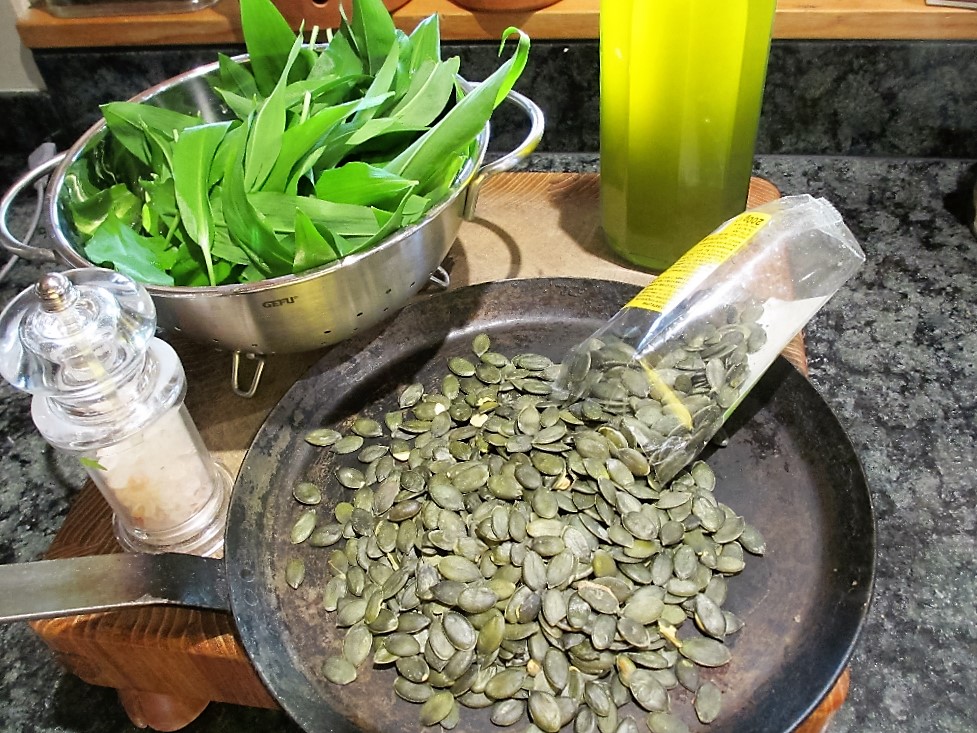
  • 1 or 2 handfuls of wild garlic
  • 500g pumpkin seeds
  • olive oil or, if you fancy something more pumpkiney, pumpkin seed oil (more expensive, though)
  • salt to taste

What you do


  1. Wash the wild garlic and make sure that it is reasonably dry.
  2. In a frying pan or on a skillet roast the pumpkin seeds until the delicate smell reaches your nose; they should be slightly browned and start making a crackely sound.
  3. Meanwhile chop the wild garlic roughly, then put it in the blender with the roasted seeds.
  4. Blend to your liking (some like a pesto to be smooth, others like the bits in it) adding oil to get the right consistency.
  5. Salt to taste.

08 November 2015

Curried Sweet Potato and Coconut Milk Soup


As the days grow cooler and shorter, it is time for warming soups once again. I made this really quick soup the other day because we had some sweet potatoes that needed eating. Coconut milk is something I usually have in the house, and ginger and garlic paste (easy to make, equal amounts mashed up) is also a staple for any curry lover; it would keep a week or two in theory but usually doesn’t last that long. This, served with pita bread or whole meal toast, is a meal for about three or an ample starter for 4 to 5 people.  

What you need

  • 2 tblsp of neutral cooking oil (sunflower, rapeseed, maize; not pictured)
  • 1 medium shallot or onion finely chopped
  • 2 cloves of garlic and an equal amount of fresh ginger mashed or finely chopped
  • 1 tbsp curry masala (Madras would be my preference)
  • 1 tbsp turmeric
  • 4 medium sized sweet potato, cubed
  • 2 small or 1 medium potato, cubed
  • 500 ml coconut milk
  • ca 500 ml veggie broth
  • salt, pepper for further seasoning
  • cayenne pepper to taste

What you do

  1. Fry the shallot and the garlic/ginger mix without letting it colour.
  2. Add the turmeric and the curry masala and stir until it turns brown.
  3. Add the sweet potato cubes and coat in the mixture, then add the cubed potato.
  4. Pour in a little veggie broth to dissolve the spice mixture that may have got stuck to the bottom of the pan.
  5. Add the coconut milk and the rest of the veggie broth to cover the sweet potato.
  6. Allow to cook until it is soft; this should not take much more than 10 to 15 minutes.
  7. Liquidise the mixture and add more veggie broth if the soup is too thick.
  8. Season to taste, then sprinkle a bit of cayenne pepper on top to add a dash of colour and a little bit of a sting in the tail.