Pages

29 October 2013

Risotto with Radicchio and Mascarpone


Two remarks to start with: firstly, there are, I think, two schools of thought about the consistency of risotto, creamy or grainy, which is achieved either by stirring more or less constantly or by not stirring at all. With mushrooms I prefer it grainy, with this one I definitely like the creamy consistency, which is underlined by the mascarpone. Secondly, I had always thought of radicchio as a salad, but having had it as a crostini topping, I realised what a versatile plant it is. More on that one soon…


What you need

(serves three to four as a main meal)

  • 400 g risotto rice
  • 200 ml white wine
  • 3-400 ml vegetable broth
  • 1 medium onion, chopped
  • 2 or more cloves of garlic
  • 200 g mascarpone, perhaps mascarpone mixed with gorgonzola
  • 2 handful radicchio cut into strips, not too narrow
  • 1 yellow pepper quartered and sliced (I only had a red, but yellow looks nicer)
  • salt and pepper, optionally Teeparadies Hildegard spice mix.
  • Shavings of parmesan or pecorino romano

What you do


  1. Fry the onions in generous olive oil until they are glassy, add the rice and get it glassy as well.
  2. Pour in the wine and allow it to be absorbed, then keep adding the broth, stirring the risotto quite often.
  3. When the rice corns are still quite hard at the very centre, add the garlic and the mascarpone.
  4. Stir for another five minutes or so – until the risotto is practically done – then add the peppers and the radicchio (this way they get cooked but will still be crispy).
  5. Season with salt (if needed) and pepper, optionally but warmly recommended with the Teeparadies Hildegard herb mixture.
  6. Serve with a generous shavings parmesan or pecorino romano


23 October 2013

My Dad's Favourite Breakfast Muesli


A bit more than a year ago I had to stop doing this because things were rather hectic and I just didn't find the time to write up seasonal and mainly veggie recipes. I hope to be back to doing this again on a regular basis. What better way than to start up again with the only thing my Dad still really appreciates, because he has lost much of his sense of taste, but it seems he still likes something slightly sweet. Having said that, the sweetness in this breakfast muesli comes from its ingredients (a bit of sugar in the yoghurt, I admit), i.e. the fruit used. It also works well in winter because it uses dried fruit, fruit that is available all year or that can be kept over winter like apples.

What you need


(The following are for two people)

  • 6 heaped tbsp. mixed cereal (spelt, oat, etc.) soaked (for at least 30 mins, better overnight) in
  • multivitamin juice to cover (can be supplemented with the water used for soaking the dried fruit)
  • 1 small banana
  • 1 tub of Greek yoghurt (ideally with honey or figs)
  • 1 handful of raisins or sultanas
  • 6 slices of dried mangoes, soaked overnight
  • 6 dried apricots, soaked overnight
  • optionally 1 grated apple
  • optionally 4 dried figs, diced
  • optionally 2 tbsp of sea buckthorn extract

What you do


  1. Mash up the banana and mix in the yoghurt.
  2. Add the cereal and the raisins.
  3. Cut the soaked fruit into small pieces and add to the mix.
  4. Add the optional ingredients. 
  5. Mix well and serve (You can also leave it in the fridge for a bit...)

14 October 2012

Peppers stuffed with curried lentils


It is getting a little late in the year but our garden still produces vegetables, most notably yellow peppers, courgettes and chillies. A few weeks ago we had my cousin Mitzi and her friend Sally staying with us and they cooked us peppers stuffed with lentils so this is my attempt to do what Sally did.

What you need

  • 1-2 peppers per person, deseeded and cut in half
  • 2 carrots, diced
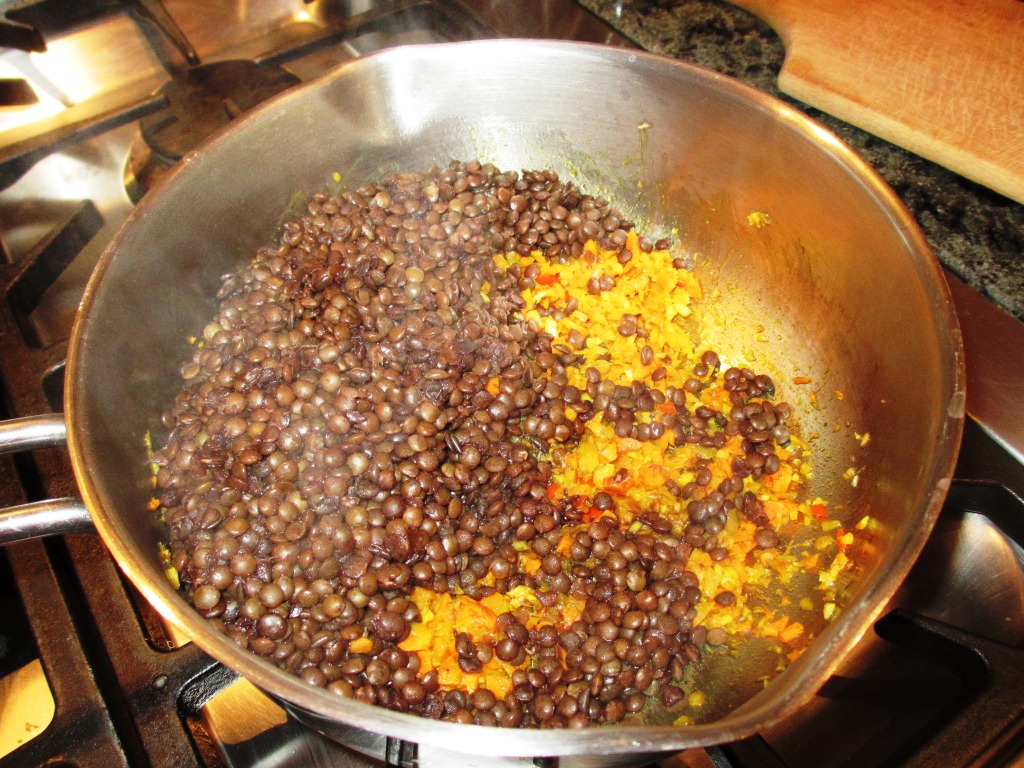
  • 200 g green lentils, cooked in 250 ml water and 150 ml red wine (20-25 mins)
  • 1 small courgette, diced
  • 2 shallots, finely chopped
  • 3 cloves garlic, pressed
  • 2 cm fresh ginger, mashed
  • ½ red chilli, deseeded if you don’t like your food too hot
  • 1 tsp jeera (ground cumin)
  • 1 tbsp madras curry powder
  •  ½ tsp cayenne pepper
  • 1 tsp turmeric
  • 4 tbsp tomato purée or 100g chopped tomatoes
  • salt to taste
  • 150 g goats cheese in thin slices
  • ½ tub crème fraîche or double cream

What you do

  1. Stir fry the onions, garlic, chilli and the ginger in rape seed or sunflower oil.
  2. Add the ground spices and allow them to go slightly brown
  3. Add the carrots and the lentils, a splash of water and the tomato (purée or chopped).
  4. Simmer until the ingredients are well blended (about 5 mins), add more water if it gets too dry. Season with salt.
  5. Take off the head and stir in the courgettes. Spoon the mixture into the halved peppers.
  6. Lay a slice of goats cheese on the lentils and add a dollop of cream.
  7. Bake in the oven (200°) or under a grill until the cheese is melted and a light brown crust has formed, about ten minutes. 

08 October 2012

Polenta Slices with Chantarelles and Boletus in Port (and Cream) Sauce


This weekend I am looking after my Dad again. He likes his food, but a real compliment is when he says he’d like to lick the plate.
Polenta is not everyone’s favourite dish, partly because to make a good one is time consuming business, partly because some like it runny and others firm enough to form slabs, partly because there are so many different kinds of polenta meal, from something not unlike semolina to a fine flour. I have used the rough-ground type.

How to make polenta

Again, many different views exist, from simply using salted water, to a broth or even a broth with a shot of dry sherry or white wine. In the end, it is a matter of taste.
It is easy to freeze in handy portions, especially if you make a dry polenta. As it takes a fair bit of work, I tend to make enough for about three helpings (300 g to start with can go a long way).
Bring water or broth to the boil; it should be 4 parts liquid to 1 part of the polenta flour (200g would mean about 800 ml liquid). If you want a dry polenta, add little to no liquid later on…
Pour in the polenta flour and stir until the liquid has been absorbed. If you have a slow-cooker, put it in there for at least 2 hours, stirring occasionally. If you haven’t, turn the heat all the way down and stir regularly for at the very least 30 minutes. The longer you heat it, the smother it becomes. Leave to stand for a bit.
For the slices spread the polenta on a wet wooden board, smoothing it with a wet wooden spatula or a knife, the leave it to cool.  

What you need


  • 2 polenta slices per person
  • 1 knob of butter and a dash of olive oil for frying the polenta
  • 1 knob of butter and a dash of olive oil for the fungi.
  • 300 g of chanterelles and boletus, cleaned with a (dry!) brush, sliced
  • 1 shallot finely cut
  • ½ red chilli diced small
  • 4 cloves garlic, thinly sliced
  • 1 tsp hot paprika
  • Salt and pepper to taste
  • 100 ml Port (possibly mixed with red vermouth)
  • 1 tbsp tomato purée
  • 100 ml double cream or 50% crème fraîche if you find the mixture with the port too sweet; for vegans, obviously leave this out.

What you do


  1. Fry the polenta slices with the butter and olive oil on a medium until they are golden and have a nice crust on the outside.
  2. Heat the oil and butter, add the shallots, then the garlic and last the chilli. Don’t let them take colour.
  3. Add the chanterelles and the boletus and sauté. Season with paprika, salt and pepper.
  4. Pour in the port, add the tomato purée and reduce till it is a bit thicker. You may want to remove the fungi before reducing and add them again before serving.
  5. Last, add the cream and reduce. (Put in the fungi again, warm up)
  6. Pour over the polenta slices and serve with a salad.

17 September 2012

Leek, Pear and Blue Cheese Pasties


At the moment we reap the benefits of Caroline’s careful cultivation of our leek bed. As happens so often with such a vegetable bed, you end up with a glut. This dish was one way of dealing with this. The pears, which don’t appear in the “What you need” photo, were Caroline’s afterthought to use up slightly overripe fruit, and an inspired one as it turned out.


What you need


  • 2 leeks sliced, including the green bits
  • 1 onion, diced
  • 1-2 cloves of garlic, pressed (optional)
  • 2 tbsp olive oil
  • 1 tsp mixed spices (e.g. black pepper, cayenne pepper, hot paprika, ground coriander)
  • 1 tbsp instant vegetable broth
  • 1 tbsp dried herbs (e.g. Greek oregano)
  • 100 ml dry sherry
  • 250 g mild blue cheese, Gorgonzola, bleu-de-Bresse or our very own Blaues Wunder
  • 2 sheets of puff pastry about 300g each
  • 1 or 2 pears, peeled and sliced (not pictured)
  • 1 egg, beaten

What you do


  1. Sauté the onions and the garlic, if using, with the mixed spices until the spices are a bit darkened.
  2. Add the leek and stir-fry until the leeks are wilted.
  3. Sprinkle with vegetable broth and dried herbs.
  4. Pour in the sherry and the blue cheese in small cubes. Stir until the cheese is melted.
  5. Finally, add the pieces of pear.
  6. Lay out one sheet of puff pastry, distribute the vegetable and cheese mix for the pasties. Brush the area where the pastry sheets are meant to stick together with part of the beaten egg.
  7. Cover with the second sheet of puff pastry and press together with a fork. Brush with the rest of the egg for a glazed finish.
  8. Bake in a hot oven (200°) for about 20 minutes – until the pasties are golden brown.

Served with a mixed salad this is a lightish meal.

15 September 2012

Damson Flan


What you need It is damson time and the neighbouring farms are almost giving them away. My Mother, who would have been 87 last Tuesday, used to make quiches and lovely fruit flans on Fridays, and at this time of year it was obviously done with damsons.This one is quite a quick one to make.

What you need: 


  • 300 g spelt flan dough spread to fill a 30 cm flan tin (100 g butter is rubbed into 200 g spelt wholemeal flour mixed with 1 level tsp salt and two tbsp vanilla sugar. Then work about 200 ml of water into the crumbs, adding water while kneading until the dough is firm and doesn’t stick to your hands; lazy alternative: buy it already spread. There is very good organic stuff around.)
  • 1 kg damsons, more if you have them, halved, stone removed
  • 2-3 generous tblsp ground almonds or hazelnuts,
  • 4 tbsp cane sugar
  • optionally 1 heaped tsp cinnamon powder
  • juice of ½ lemon
  • Optionally: whipped cream and plum schnapps for serving

What you do:


  1. Line a flan tin with greaseproof paper and then with spread dough, making sure it comes up the sides.
  2. Mix 2 tbsp of the cane sugar with the ground almonds or nuts (and the cinnamon, if using) and distribute evenly over the base.
  3. Lay the damson halves in concentric circles that should overlap on the base.
  4. Sprinkle with the remaining 2 tbsp of cane sugar and drizzle the lemon juice evenly over the damsons.
  5. Bake in the preheated oven at 200°, checking after 20 minutes.
  6. Serve hot or cold, if you like with a dollop whipped cream and optionally a light drizzling of plum schnapps.

05 September 2012

Greek-style Cracked Baby Potatoes


I had this when I was in Greece and loved it. It is utterly delicious with small new potatoes, which have a lot of surface area for the cooking “juices”; needless to say, you can also do it with slightly bigger ones. I cannot guarantee that this is like the traditional Greek recipe but I prefer taste to authenticity.

What you need


½ - 1 kg of small new potatoes
4-5 tbsp balsamico vinegar
olive oil for frying
1-2 tbsp coriander seeds
1 tsp fenugreek or fennel seeds
1 tsp black pepper corns
sea salt to taste
fresh herbs, finely chopped (Greek basil, oregano, marjoram, flat-leaved parsley, coriander leaves, etc.)
zest of 1 lemon
2 cloves garlic, pressed
optionally: capers and/or dried olives, finely chopped

What you do


  1. Crack the washed, unpealed potatoes with a kitchen hammer or under the flat blade of a large knife which you smack with your fist; the potatoes must only be cracked, not broken up!
  2. Heat the oil in a heavy pan with a lid and add the potatoes in a single layer. Sauté with the lid on until they are a golden.
  3. In the meantime grind the spice seeds and the salt with mortar and pestle. 
  4. Add the balsamic vinegar and the spice mix and shake thoroughly. Add the capers and/or dried olives, if using.
  5. Cook with the lid on for about 15 min. until they are softened but still firm.
  6. Stir in the herbs, lemon zest and the garlic, warm once more briefly and serve with Tsatsiki and a Greek or other salad for a delicious, light meal.