Pages

20 May 2012

Asparagus Cream Soup with Fresh Herbs


This is the companion recipe to the Risotto with Green Asparagus Tips as it uses up the stalks. These don’t need to be done right away but because they freeze well they can still be used a few days later. On the other hand, the soup can be made at the same time as the risotto (as I did, in fact) and frozen for later use, although I would add the cream when cooking it before serving.


What you need

  • 1 knob of butter
  • 1 medium onion, diced
  • 2 cloves garlic, pressed (if you don’t have wild garlic)
  • 1 to 2 bundles of green asparagus stalks, cut into thin slices, (discard the dry ends)
  • 2-3 asparagus tips per person for decoration (won’t work if you freeze the soup)
  • 1 tblsp sugar
  • salt to taste
  • 2-3 tblsp white balsamic or cider vinegar
  • 1 l vegetable broth
  • 200 ml fresh cream (optionally half of that whipped)
  • a cup of chopped fresh herbs (lovage, flat-leaved parsley, tarragon, wild garlic)
  • (salt and) pepper to taste

What you do

  1. Melt the butter and sauté the onions (and garlic if using)
  2. Add the sliced asparagus stalks, sprinkle with sugar, salt and the vinegar. Sauté for about 5 minutes, making sure the ingredients don’t take colour.
  3. Add the vegetable broth and simmer until the stalks are soft.
  4. Purée and pass through a sieve to ensure that the woody fibers are left behind, but the soft tissue can be mixed into the soup. (If this is for guests or you intend to freeze the soup for later use, this is where you stop to do the remaining steps when you need to get the soup onto the table.)
  5. Add the asparagus tips and bring the broth to the boil. Simmer until the tips have reached the softness you like (I like them quite crunchy).
  6. Add the cream (the whipped cream can be placed into the plates immediately before serving with the soup poured on top) and the fresh herbs, warm up and serve immediately. 

14 May 2012

Chestnut and Vegetable Terrine


The last couple of days it was really cold and unfriendly for the season so I had a look at this recipe, which uses root vegetables and is thus perhaps a bit wintery for the season. But it can be made into a spring dish with spring vegetables (frozen chestnuts or dried chestnuts being available the year round).


What you need

  • 300 g chestnuts peeled
  • 2 spring onions finely chopped (can be substituted with onions or leek, depending on availability)
  • 3 cloves of garlic, pressed
  • 80-100g finely chopped carrots
  • 80-100g finely chopped fennel
  • 80-100g finely chopped celeriac (experiment, substituting kohlrabi, celery, small peas, peperoni, zchini, etc.)
  • 50 g bread, cut small and soaked in white wine until soft
  • 3 eggs
  • 300 ml crème fraîche
  • Salt and pepper
  • herbs (lovage, sage, parsley, majoram)

What you do

  1. Steam the chestnuts until they are soft and mash them (completely not as shown in the picture).
  2. In a frying pan, melt a knob of butter and sauté the onions, garlic and then the other vegetables making sure they still have plenty of bite.
  3. Mash the bread and mix with the chestnuts.
  4. Mix the eggs, the chestnut mash and the crème fraîche and stir in the vegetables.
  5. Season with salt, pepper and the herbs.
  6. Pour into a terrine dish or a cake tin that has been buttered thoroughly and line with buttered baking paper.
  7. Sit in a baking tray filled with hot water three quarters of the way up the terrine dish or baking tray.
  8. Put in the oven at 180° C for about an hour or until a skewer stuck into the terrine comes out clean.
Remove from the terrine dish / cake tin, cut with a sharp, hot knife and serve with steamed vegetables lightly seasoned and drizzled with olive or even better pumpkin seed oil.
Tastes fine cold as well.

07 May 2012

Risotto with Green Asparagus Tips


The asparagus bonanza continues. The recipe that follows is again based on an asparagus fond and as there will be a fair bit of the slightly less tender stalks left over, another asparagus recipe – asparagus cream soup with fresh herbs – will follow to make use of these. 

What you need

  • 1 bundle of green asparagus, cut off from the top, about 10 cm long
  • peels and the woody parts at the bottom
  • 30 g butter
  • 1 medium onion chopped
  • 2 tsp sugar
  • 2 tblsp apple balsamico vinegar (or a not too acerbic white wine vinegar)
  • vegetable stock cube or powder
  • 400 g risotto rice (carnaroli or Ticinesi Riso Nostrano)
  • 1 medium onion finely chopped
  • 2 cloves of garlic, pressed
  • 2 tblsp olive oil
  • 100 ml good white wine
  • 5 medium-sized leaves of wild garlic, finely chopped

What you do

  1. Melt the butter and and sauté the peels and parts of the asparagus that are too woody or stringy to eat until the peels are soft and the pan has taken a bit of colour.
  2. Add the sugar, the stock and finally the vinegar, making sure that the browning in the bottom of the pan is dissolved, then cover with water.
  3. Leave to simmer for at least 10 minutes, strain and put the fond aside.
  4. In the meantime, heat the oil sauté the onions and add the garlic a bit later without letting them colour. Add the rice and stir until it looks glassy.
  5. Pour in the wine, then the asparagus fond and stir. Leave to simmer for about 5 minutes, then add the asparagus tips (earlier if they are rather thick).
  6. Allow to simmer till the juices have been soaked up and the rice is done (depends on the type of rice you use).
  7. Shortly before serving, add the wild garlic but make sure you don’t destroy the delicate tips when you stir it in.
  8. Serve with a generous helping of freshly grated parmesan or pecorino romano.

Remarks

With the rest of the stalks I make an asparagus cream soup while the risotto simmers. This works well frozen so as not to OD on asparagus. The recipe for this will follow shortly.

28 April 2012

Asparagus in a Creamy Fond


This recipe is dedicated to my Dad. I cooked it for him today, he praised it in words and by cleaning out the plate with bread, barely leaving the glazing intact. 

Asparagus for me is one of the quintessentially seasonal foods, at a time when there are not many new things ready picking. I dreamt this one up a couple of years ago because making a real Hollandaise is not that failsafe/foolproof and homemade mayonnaise is something relatively easy to make and yet I often somehow manage to mess it up. (By the way. in one of restaurants near my home specialising in fresh asparagus, they have a homemade mayonnaise with a bit of asparagus fond in it, simply delicious) 
I came up with this very aspargussy recipe as an answer to the above. It’s not terribly quick and easy but, according to my Dad, well worth the effort.

What you need (for 2 people)

  • 10 white and 10 green asparagus (all the same kind works too), the former peeled, the latter just peeled at the lower end
  • the peelings and the woody bits
  • 30 g butter
  • 1 medium onion chopped
  • 1-2 tsp sugar
  • 2 tbsp apple balsamico vinegar (or a not too acerbic white wine vinegar)
  • vegetable stock cube or powder
  • water to cover the asparagus
  • 100 ml fresh (or, if you are feeling naughty, double) cream
  • 1-2 cloves of garlic, pressed, or a handful of finely chopped wild garlic
  • salt and pepper to taste (possibly a dash of tabasco)

What you do

  1. In a frying pan, melt the butter and sauté the onion, the peels of the asparagus and the finely diced bits you have cut off.
  2. After about 5 minutes of steady stirring, add the sugar, vinegar and the stock cube/powder; stir.
  3. Put in the asparagus and add enough water to cover them just about. This is the asparagus fond, which will form the basis of the sauce.
  4. Allow to simmer until the asparagus have reached the desired softness (Caroline likes them quite soft, I prefer them al dente).
  5. Take them out and put them aside, keeping them warm.
  6. Liquidise what is left in the frying pan with the garlic (if using wild garlic, add that at the end) and strain through a sieve. Press the puréed asparagus material against the mesh so as to make sure that the finest particles end up with the liquid; discard the rest (it is very stringy and woody).
  7. Stirring,  reduce the liquid until it barely covers the bottom of the pan.
  8. Stir in the cream and reduce to the consistency of a not too thick custard (adding wild garlic at this stage).
  9. Add the juices that will have gathered in the dish with the asparagus, and serve them on warm plates with the sauce decoratively poured over them. Some fresh bread to catch the sauce might be appreciated…

Remarks

Asparagus are usually sold with a kind of cover over the bottom end. I suspect this is to make it possible to sell inferior or not very fresh stuff: the best way of checking whether asparagus are fresh (and likely to be tender) is to squeeze the bottom end. If it remains entirely dry, they may need to be trimmed fairly far up. (but then that stuff makes for the rich flavour of the fond!)
As pointed out, white asparagus need peeling (all the way to the very tender top); green asparagus benefit from generous peeling at the lower end up to the point where a knife would cut them with little to no pressure. This is actually also a way to test for woodiness and to help deciding what needs to be used for the fond.
Lastly, if you are not keen on adding cream – which would make this a vegan dish if there is no dairy stuff in the veggie stock and you’ve substituted the butter with a relatively neutral vegetable oil, e.g. corn or rape seed oil – simply reduce the fond a bit further instead of adding the cream.

20 April 2012

Wild Garlic (allium ursinum) Pesto


This dish works well with any kind of fresh pasta.
Whereas commercially available pesto is often a very smooth paste (and many people like that) I prefer a rougher texture where you can bite on a piece of pine kernel, on a crumb of cheese or feel part of an actual leaf on your tongue. 
Therefore, when I make pesto Genovese (with basil and pine kernels), pesto Trapanese (with tomatoes, basil and almonds) or this one, I chop the ingredients rather than putting them in a blender. The rougher texture adds more flavour and bite to the pasta, I feel.

What you need

  • 150-200 g washed wild garlic leaves, chopped finely (see Remarks)
  • 60 g pecorino romano, roughly grated
  • 100 g pine kernels (partly substituted by walnuts for a slightly different flavour), chopped
  • 100 ml extra vergine olive oil


What you do

  1. Mix all the dry ingredients.
  2. While stirring, add the olive oil in a slow, steady stream.


Remarks

About the plant

This is probably one of the most seasonal of seasonal dishes as wild garlic (allium ursinum) aka ramson, buckrams, bear leek/garlic or wood garlic) is only visible in early spring (March till early May) and the flavour seems less pronounced, once the white blossoms appear. The connection with bears in the Latin and many vernacular names is that they used to dig the plants up for food and a kind of self-medication after hibernation because wild garlic is rich in vitamins A, B and C and not only has the same flavour as garlic but also the same medicinal properties (for more details check http://health-from-nature.net/Ramsons.html or http://www.twocrows.co.uk/kaleidescopes/text-pages/wild_garlic-text.html).
The leaves look a bit similar to the poisonous Lily of the Valley, so a little caution is necessary, but if in doubt, rubbing the leaf will dispel any uncertainty: the smell of garlic is unmistakable.  In addition, young Lily of the Valley leaves seem to grow out of each other, unfolding around a central shoot, wild garlic grows in individual leaves, each on a thin stem.

About the dish

It brings out the flavour better if you chop the wild garlic, rather than using a food processor.
Much of the flavour disappears if the leaves are boiled. If using wild garlic, as with garlic in general, but also with basil, add this right at the end of the cooking.
Left-overs stored in an airtight container (jam jar with a lid) can be kept for quite a long time in the fridge.


Freezing wild garlic

If you want to have some to freeze for a later date, mix the chopped garlic leaves with proportionally half the amount of olive oil mentioned in the recipe and leave out the cheese and the pine kernels. Put the paste into ice-cube trays and freeze in a plastic bag (unless you like garlic flavoured ice-cream…). Once frozen, store in a container and add a cube or two to dishes or sauces just before you serve them.

13 April 2012

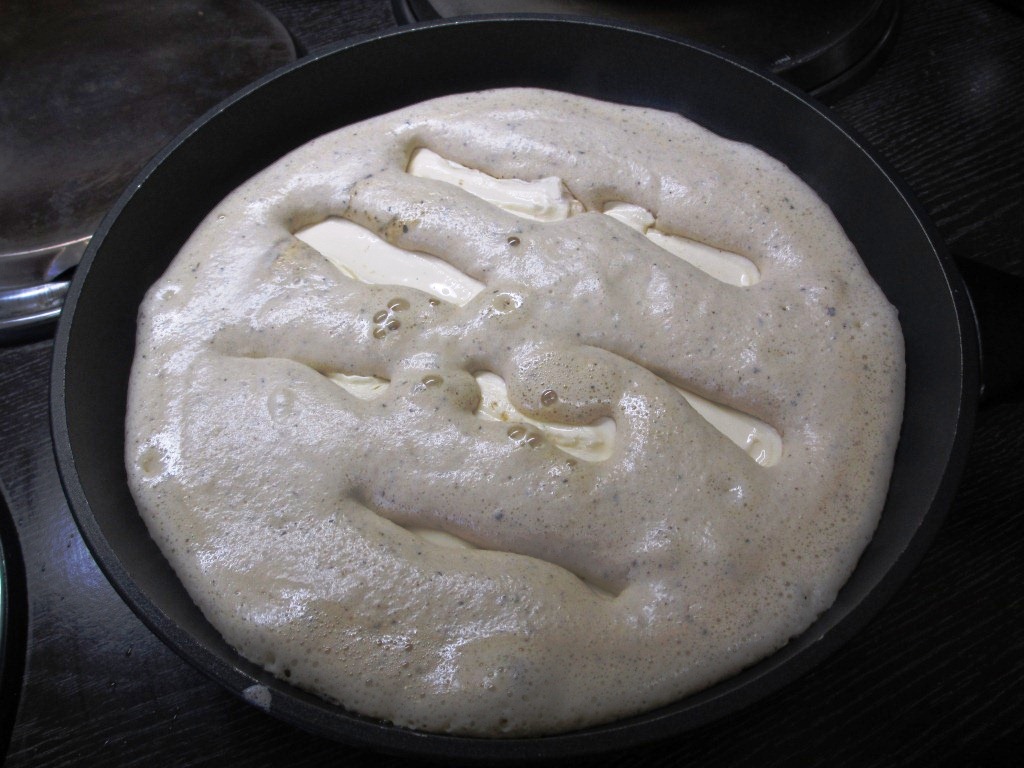
Cheese Souflée Omlet


I am still cooking for my Dad. He really liked this one. It is, again, a dish for two people, with twice the amounts it will make a meal for four, ideally served with a big mixed spring salad. 


What you need

  • 2 egg yolks whisked with
  • 1 tblsp dry sherry
  • 1 tblsp sweet soy sauce
  • 1 heaped tblsp Italian herbs
  • 1 tblsp mustard or1 tsp mustard powder
  • grated nutmeg, paprika, salt and pepper to taste
  • 2 egg whites whisked with a pinch of salt
  • 1.5 dl cream whipped
  • 1 small tomme ripe soft cheese (Reblochon, Brie, Camambert, Vacherin Mont d’Or, Gorgonzola dolce), cut into slices of about 5 mm thickness.
  • Butter for frying the omelette

What you do

  1. Separate the eggs and whisk the egg yolks vigorously with all the ingredients (sherry, soy sauce, herbs and spices. The mixture should be quite frothy.
  2. Whisk the egg whites with the pinch of salt until it forms peaks.
  3. Whip it until the whisk leaves a trace in the cream.
  4. Fold the cream and the egg whites into the egg yolk mixture, making sure that the mixture remains fluffy and light.
  5. Melt the butter in a non-stick frying pan. Very gently pour the egg/cream mixture into the melted butter and fry over medium heat.
  6. Put in the slices of cheese ensuring that they are evenly spaced.
  7. Reduce the heat a little to prevent burning and fry until the top of the soufflé omlet starts solidifying. Season with more paprika, pepper and nutmeg if you feel it is necessary.
  8. To ensure that the top is done too, put under the grill for 1, maximum 2 minutes (too long and the soufflé effect will be ruined; the taste is still fine but the fluffiness is gone…)
  9. Serve immediately from the frying pan; waiting will deflate the dish.

Remarks

When doing this dish, don’t overdo the salt as the tomme, if it is ripe enough, will actually add plenty of flavour.
How to ripen a tomme? Simple: keep it at cellar temperature for a week, at room temperature for a couple of days. When it feels soft and squashable, it is likely to be perfect.
Cutting it at this stage may be a problem. A cheese knife with holes in it (see picture above) works just fine.